
Power and battery options
Every SiteHive Hexanode needs one of two power supplies, mains or solar, and a solar set-up needs one of two batteries, lithium or lead-acid. This page is the planning companion to Before you head on site: what each option is for, how much power a device uses, and how long a battery lasts without sun, so you can decide before the kit is ordered.
Mains power
Where there is reliable electricity, a Hexanode runs from a mains outlet through the supplied power adapter. There is no battery to maintain and no panel to keep clear, so it is the simplest option wherever an outlet is within reach of the mounting position.
Daily power consumption is small, which is also what makes solar practical:
SiteHive Hexanode Noise+Dust: 21.6 Wh a day.
SiteHive Hexanode Noise: 12 Wh a day.
SiteHive Hexanode Vibration: 8 Wh a day.
Solar power
In remote or off-grid locations, solar is the usual answer. A Hexanode draws so little that a 10 W or 20 W panel keeps it running indefinitely, as long as the panel sees the sun. The panel connects to a solar controller, the controller to the battery, and the battery to the device. What the controller's lights mean, and how to reset it: Solar controller: check it is charging, and reset it.
Two things decide whether a solar set-up stays up through the year. The panel should face north and be tilted to catch the winter sun, and it needs to stay clear: grass, mud, bird droppings and new shade from a shed or a stockpile are the usual reasons a battery starts dropping. The checklist for a battery that is losing charge is in If a device goes offline.
Battery options
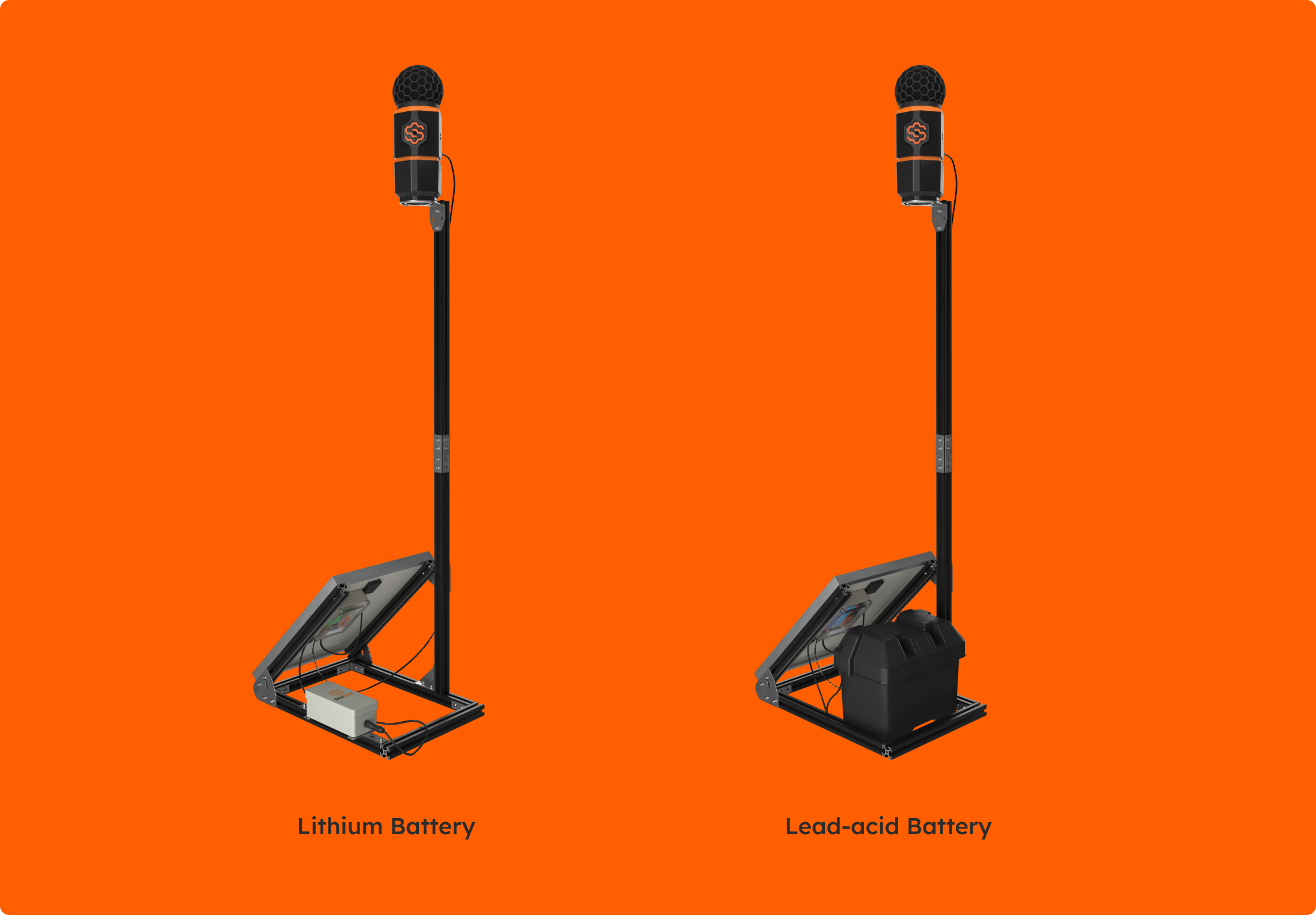
SiteHive devices run on either a lithium or a lead-acid battery. Lithium is small and light, so it suits any mounting position, including a pole or a rail. Lead-acid is heavier and bulkier, but it holds more, so it runs longer between charges and rides out a longer run of dull days. Which one suits depends on how you are mounting the device and how much sun the location gets.
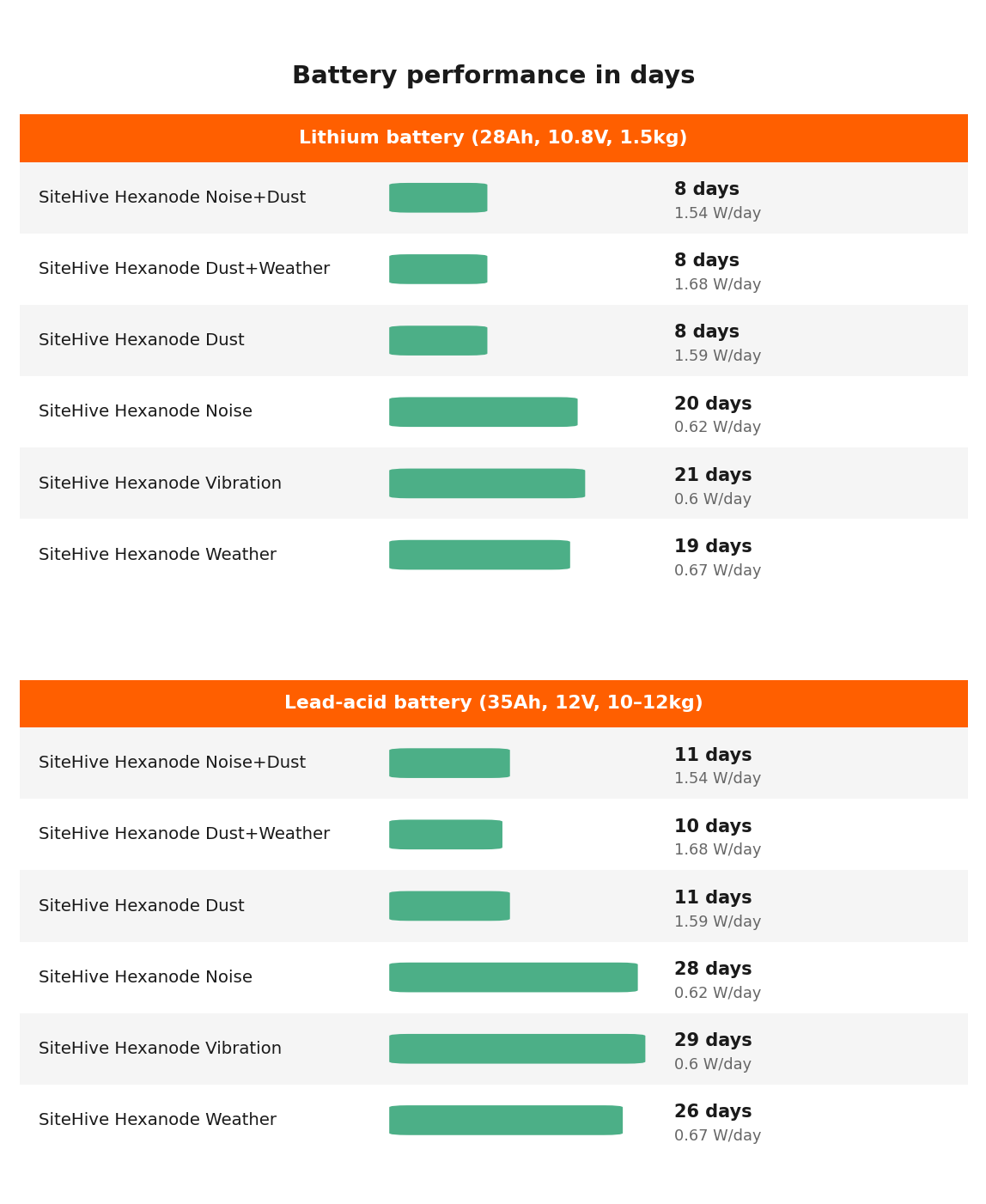
On a full charge with no sun at all, a Noise, Vibration or Weather device runs for about three weeks on a lithium battery (28 Ah) and about four on lead-acid (35 Ah). A Noise+Dust, Dust or Dust+Weather device draws more and runs for about eight days on lithium and ten to eleven on lead-acid. With a panel in the sun those figures do not apply: the battery is topped up every day and the device runs indefinitely.
💡 Avoid running a battery flat: deep discharges significantly reduce the number of recharge cycles the battery can deliver.
Backup chargers are available for both battery types, to bring a battery back up on site or in the office rather than replacing it. Ask your Regional Success Manager.
The two battery options on a SiteHive Hexanode Noise+Dust solar set-up:
What's next
Before you head on site (the deployment plan this decision belongs to)
Install your SiteHive Hexanode Noise, Dust or Noise+Dust and Install your SiteHive Hexanode Vibration (building the solar stand, lithium or lead-acid)
Deployment gallery: how sites set up their devices (how other sites mount their panels and batteries)